
Unpaid medical bills and a utility notice cover a kitchen table. A homeowner sits there, staring at a 540 credit score on a smartphone, wondering if a personal loan is a lifeline or just another trap. This is the daily reality for millions of Americans caught between immediate financial needs and the rigid gatekeeping of traditional banks.
Securing capital often feels tied strictly to a three-digit number. While high scorers move through applications with relative ease, those on the lower end face a much harder climb. The reality of the current market is that credit scores dictate not just if you can borrow, but how much you can get and exactly how much it’s going to cost you.
The data shows this disparity clearly. A Personal Loans Landscape Report indicates that the average credit score for those receiving offers shifted from 717 in 2019 Q3 to 708 in 2020 Q3. This downward trend in qualifying scores reflects an economy where even “good” borrowers are getting squeezed by tighter lending standards.
Lenders don’t follow a single rulebook. They use a tiered system of risk assessment. If you fall into the lower tiers, the math changes. You’re essentially paying a premium for the risk that you might not pay the lender back. It’s an expensive way to solve a problem, but for many, it’s the only option on the table.
The Spectrum of Approval and Interest Rate Volatility
If your score is above 740, the process is usually just a few clicks and a quick automated check. These borrowers typically find the most competitive rates and the longest repayment terms. They’re the “gold star” clients banks fight over, often receiving offers where the cost of borrowing is almost negligible.
As the score drops, the options narrow. Once a borrower hits the 600s, they enter a transitional zone. Many traditional banks will still talk to them, but interest rates start to climb. This is where the trade-off becomes obvious: you get the money you need, but you’ll end up paying significantly more over the life of the loan than someone with a 700 score.
At the bottom end, the rules change entirely. Some platforms have emerged specifically to cater to this group. For example, a report from Finance Yahoo notes that Radcred has launched new platforms targeting those with scores of 580 or lower, specifically for people who might be told “no” elsewhere.
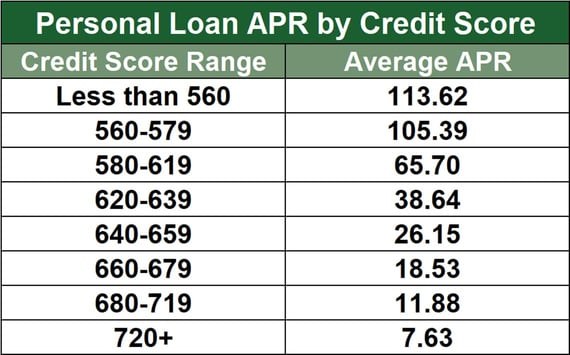
Is it possible to find a loan when everyone else says no? It depends on how much interest you’re willing to accept. The math is simple and brutal. A person with a 550 score might find a lender willing to give them $5,000, but the APR could easily exceed 35%. A loan meant to fix a financial crisis can actually deepen it if you don’t manage it with extreme care.
The following table outlines the general experience based on credit tiers:
| Credit Tier | Typical Score Range | Likelihood of Approval | Primary Cost Driver |
|---|---|---|---|
| Excellent | 720 – 850 | Very High | Low Interest Rates |
| Good | 690 – 719 | High | Moderate Interest Rates |
| Fair | 630 – 689 | Moderate | Variable Rates & Fees |
| Bad/Poor | 300 – 629 | Low to Moderate | High APR & Stricter Terms |
When people look for FastLendGo personal loans, they’re often looking for a middle ground between a big-name bank and a predatory payday lender. Finding that sweet spot requires knowing exactly where you sit on the scoreboard before you start hitting “apply” on every website you see.
Navigating the Risks of Subprime Lending Products
“Guaranteed approval” marketing is a siren song. While some lenders do specialize in high-risk profiles, “guaranteed” is often used loosely in the fine print. Usually, it just means you’re likely to be approved, but the terms might be punishing. There’s a massive difference between being approved for a loan and being approved for a sensible one.
Lenders offering loans to those with poor credit look at more than just the FICO score. They might scrutinize your income, your employment history, or your banking activity. If a lender is willing to ignore a low credit score, they’ll make up for it by charging higher interest or requiring more frequent payments. It’s a bit like buying a used car from a shady lot; the price is low, but the repair bills are a certainty.
Payday loans and cash advances are the most dangerous part of this spectrum. These aren’t truly personal loans. They’re short-term, high-interest tools that often lead to a “debt trap” where you have to take out a new loan just to pay off the old one. Distinguishing between a legitimate personal loan lender and a high-interest lender is the most important step you’ll take.
The risks aren’t just about the interest rate. You have to consider your long-term financial health. If you use a high-interest loan to pay off a low-interest credit card, you might be consolidating debt, but you’re making your debt more expensive. It’s a move that requires a very disciplined exit strategy.
- Predatory APRs: Some lenders target people in distress with rates that can exceed 300% annually.
- Hidden Fees: Watch for origination fees that are taken out of your loan amount before you even see the cash.
- Repayment Cycles: Short-term loans may require repayment much faster than a standard 36-month personal loan.
- Impact on Credit: While some lenders report to credit bureaus to help you, others don’t, meaning the loan won’t help you build the score you need to escape this tier.
What Lenders Actually Want to See
If your score is low, you need to provide other evidence that you’re reliable. Lenders are looking for certainty. They want to know the money you borrow will come back to them with interest. If your credit score says you’re a risk, you have to use your income and your history to prove the score is wrong.
A steady paycheck is your most powerful tool. A lender might overlook a 580 score if they can see a consistent, verifiable stream of income through bank statements or pay stubs. They want to see that you have the cash flow to handle a monthly payment without skipping rent.
Debt-to-income ratio (DTI) matters a lot, too. Even with a bad score, if your total monthly debt is low compared to your income, you’re a much more attractive candidate. A lender would much rather lend to a person with a 600 score and no other debt than a person with a 700 score who’s already struggling with five different credit cards.
Consistency in employment is the third pillar. A job you’ve held for three years is worth significantly more than a series of gig-work roles that change every few months. Stability suggests a predictable lifestyle, and predictability is the bedrock of lending. If your life is in flux, a lender will likely walk away, regardless of how much money you say you make.
You should prepare a folder containing:
- Two months of recent pay stubs.
- The last two years of W-2 forms or tax returns.
- A recent utility bill to prove residency.
- A clear, itemized list of your current monthly debts.
The Reality of Debt Consolidation Strategies
Many people seek personal loans specifically to consolidate high-interest debt. The logic makes sense: take one large loan at 15% to pay off five credit cards at 29%. If the math works, it’s a smart move. If it doesn’t, if the new loan’s term is too long or the APR is too high, you’ve just rearranged the deck chairs on a sinking ship.
The danger of consolidation is the “phantom” credit limit. Once you use a personal loan to pay off your credit cards, those cards show a zero balance. Your credit score might actually jump because your credit utilization dropped. This is a psychological trap. People see their score go up, feel successful, and then start spending on those cleared cards again. Now, they have the new loan *and* the old credit card debt.
To avoid this, treat a consolidation loan as a permanent change to your finances, not a quick fix. You have to stop using the cards you just paid off. Without that discipline, you’re just adding a new layer of debt on top of an old habit.
Some lenders market “debt relief” loans. These are often more aggressive than standard personal loans. Check if the lender is a legitimate financial institution or a company that just takes a large fee to negotiate with your creditors. The latter can sometimes cause more harm than good by putting you in default with your current lenders.
Successful consolidation requires looking at the numbers coldly. Calculate the total interest you’ll pay over the life of the new loan. Then, calculate the total interest on your current debt. If the new number isn’t significantly lower, the effort isn’t worth the hassle.
Borrowing is a tool, but it can be used to build a house or to tear one down. The difference depends almost entirely on the person holding it.
Common questions
Can I get a personal loan with a credit score of 500?
Yes, but you will likely need a co-signer or will need to look at specialized lenders that cater to bad credit, often with much higher interest rates.
Who will give me a loan when nobody else will?
Lenders that specialize in subprime credit, such as certain online fintech lenders or credit unions, are most likely to approve applications that traditional banks reject.
Can I get a $200,000 loan with a 700 credit score?
While possible, a $200,000 personal loan is extremely rare due to high risk; most lenders cap personal loans at much lower amounts regardless of credit score.
What credit score do I need for a $10,000 personal loan?
A score of 670 or higher typically qualifies you for competitive rates, though lenders will also heavily consider your income and debt-to-income ratio.
How does my credit score affect my personal loan interest rate?
Higher credit scores qualify you for lower interest rates and better terms, while lower scores result in higher costs and a higher likelihood of rejection.